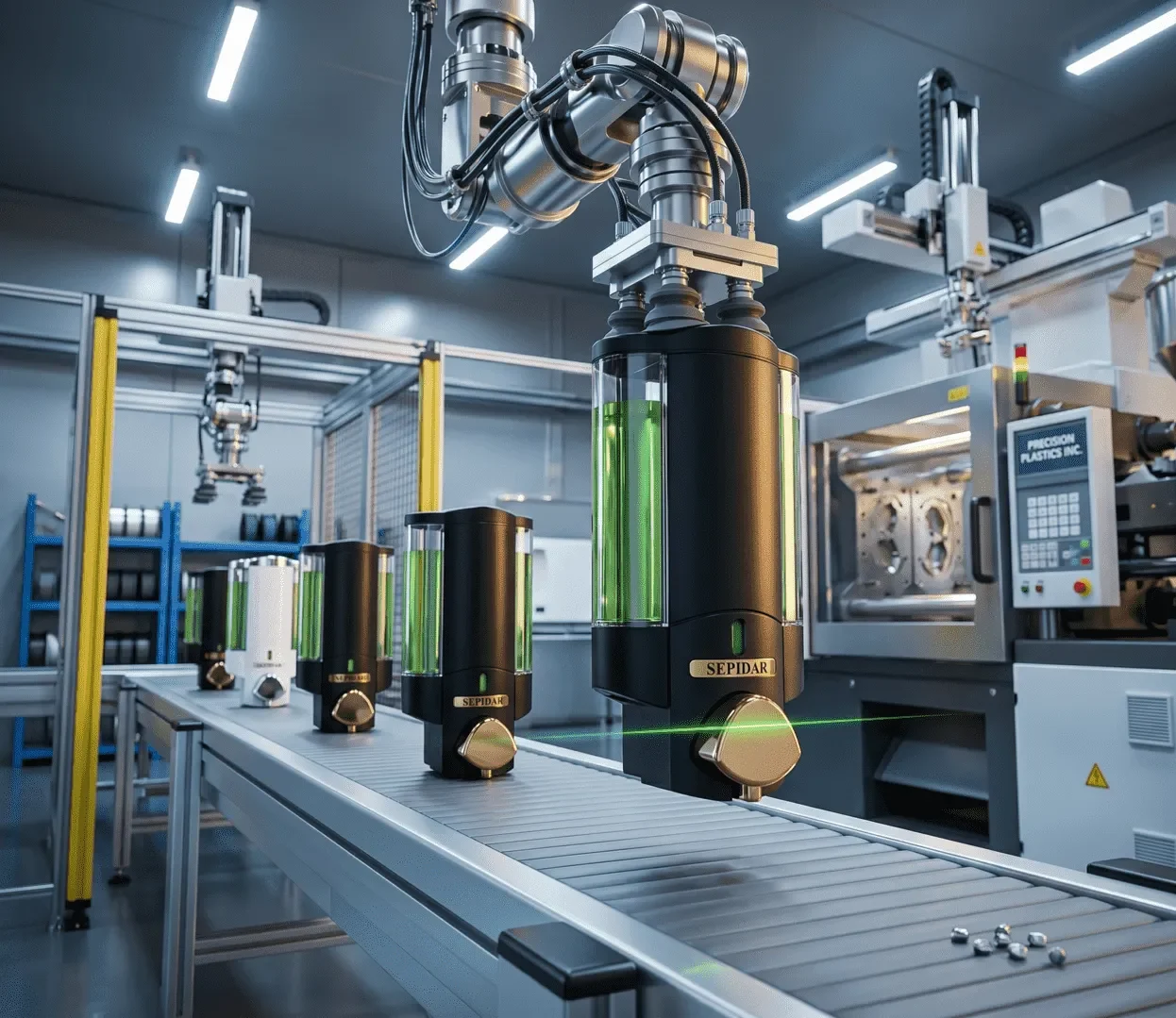
Article Summary
| Topic | Description |
|---|---|
| Main Topic | Custom Soap Dispenser Manufacturing for Private Brands |
| Partnership Model | OEM and Private Label |
| Suitable For | Wholesalers, brands, trading companies, hotels, and chain stores |
| Benefits | Lower product development costs, faster time to market, and greater focus on sales and branding |
| Implementation Stages | Product design, material selection, prototyping, mass production, and quality control |
| Minimum Order | Varies depending on the product type and production line |
| End Goal | Launch a customized product under the client’s own brand name and identity |
Many brands in sanitary accessories, building supplies and washroom equipment choose custom soap dispenser manufacturing, or OEM, instead of making a major investment in their own factory and production lines. This model allows a business to market products under its own brand while production is handled by a specialized manufacturer.
Across industries worldwide, from electronics to sanitary products, a significant share of goods on the market is manufactured through OEM agreements. In the soap dispenser and washroom accessories sector, this model has likewise become a common approach to brand development.
In this guide, we examine every stage of soap dispenser OEM, including material selection, quality control, branding, and bulk ordering, to give you a clear understanding of how to work with a professional manufacturer.
What Is Soap Dispenser OEM?
OEM stands for Original Equipment Manufacturer.
Under this model, the manufacturer produces the product according to defined technical specifications, and the finished product is marketed under the customer’s brand.
For example, a distribution company or a brand in the building-equipment sector can offer a range of wall-mounted and countertop soap dispensers under its own name and packaging without operating its own manufacturing facility.
What Is the Difference Between OEM and Private Label?
Although these two terms are sometimes used interchangeably, there are important differences.
| Feature | OEM | Private Label |
|---|---|---|
| Product Design | Customizable | Usually pre-designed |
| Mold Modification | Available | Limited |
| Product Exclusivity | High | Moderate |
| Development Cost | Higher | Lower |
| Brand Identity | Fully customized | Customized through packaging and branding |
In many industrial projects, partnerships combine elements of both models.
Why Are Brands Moving Toward Custom Soap Dispenser Manufacturing?
The washroom equipment market has become increasingly competitive in recent years. Many companies are seeking to expand their market share by offering differentiated, branded products.
The main benefits of custom manufacturing include:
Build an independent brand identity
When a product is offered with a customized logo, packaging, and specifications, it strengthens the perceived value of the brand in the customer’s mind.
Reduce capital investment
Setting up a soap dispenser manufacturing facility requires significant investment in areas such as:
- Mold making
- Plastic injection molding machinery
- Assembly
- Quality control
- Warehousing
Under the OEM model, these costs can be reduced substantially.
Faster time to market
One of the key advantages of working with a professional soap dispenser manufacturer is a shorter product development cycle.
Expand the product portfolio
Brands can develop multiple product models simultaneously without the need for direct manufacturing investment.
Which Businesses Need Custom Soap Dispenser Manufacturing?
Building equipment wholesalers
Distributors and wholesalers can introduce their own branded products and reduce their dependence on price-only competition.
Chain stores
Many major retailers worldwide use the Private Label model to develop their own brands.
Import and trading companies
When importing certain products involves restrictions or high costs, custom domestic manufacturing can provide a practical alternative.
Hotels and construction projects
Large projects may require sanitary accessories with a custom design or visual identity. For the technical criteria of these environments, see our soap dispenser guide for hotels, hospitals and offices.
Brands specializing in washroom accessories
Brands focused primarily on sales and marketing often rely on the capabilities of specialized manufacturers.
Stages of Custom Soap Dispenser Manufacturing
Stage One: Define Project Requirements
At the beginning of the partnership, the following should be defined:
- Product type
- Target market
- Required production volume
- Project budget
- Product technical specifications
At this stage, the project’s initial specifications are typically documented.
Stage Two: Select the Product Model
Custom products may include the following models. To compare existing options, browse the Sepidar Plastic product catalog:
Wall-Mounted Soap Dispensers
Suitable For:
- Hotels
- Healthcare facilities
- Office buildings
- Large-scale construction projects
Explore more: wall-mounted soap dispenser models
Countertop Soap Dispensers
Suitable For:
- Residential use
- Home appliance stores
- Online retail
Explore more: countertop soap dispenser models
Stage Three: Select Materials
Material selection is one of the most important stages of the OEM process.
ABS
Benefits:
- High durability
- Suitable appearance
- Long service life
- Moisture resistance
Polypropylene (PP)
Benefits:
- Cost-effective pricing
- Good chemical resistance
- Lightweight
Polycarbonate (PC)
Benefits:
- High impact resistance
- Good transparency
- Long-lasting durability
The Importance of Design in OEM Projects
Many brands assume that product success depends only on manufacturing quality, while design also plays a major role.
Product design should take the following into account:
- Ergonomics
- Ease of use
- Visual appeal
- Ease of Cleaning
- Coordination with the washroom environment
In successful projects, product designs are typically evaluated by users before entering mass production.
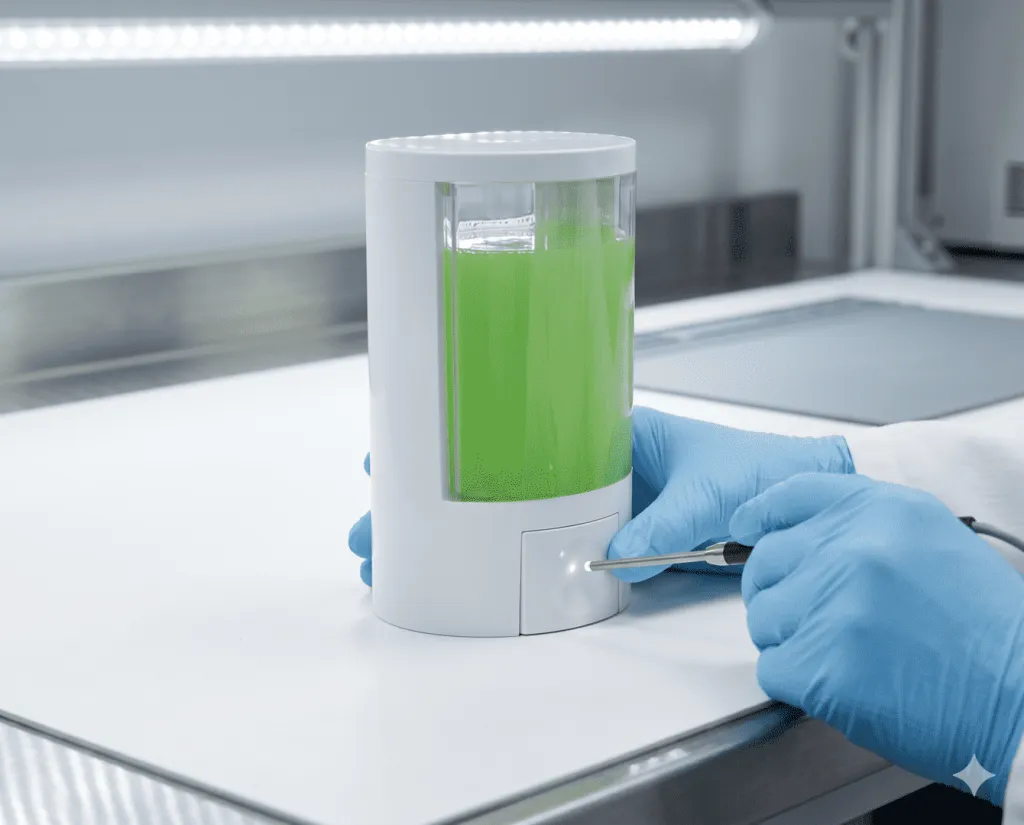
Customization in Custom Soap Dispenser Manufacturing
One of the most important advantages of OEM is the ability to customize the product.
Logo Printing
The following can be added:
- Brand logo
- Company name
- Product information
on the product body or packaging.
Custom Color Selection
In many projects, product colors are selected to match the brand’s visual identity.
Custom Packaging
Packaging plays an important role in both customer experience and product sales.
The following packaging elements can be customized:
- Product box
- Master carton
- Label
- Brochure
Custom Mold Development
For large projects, custom mold design can also be provided.
This approach offers the highest level of differentiation from competitors.
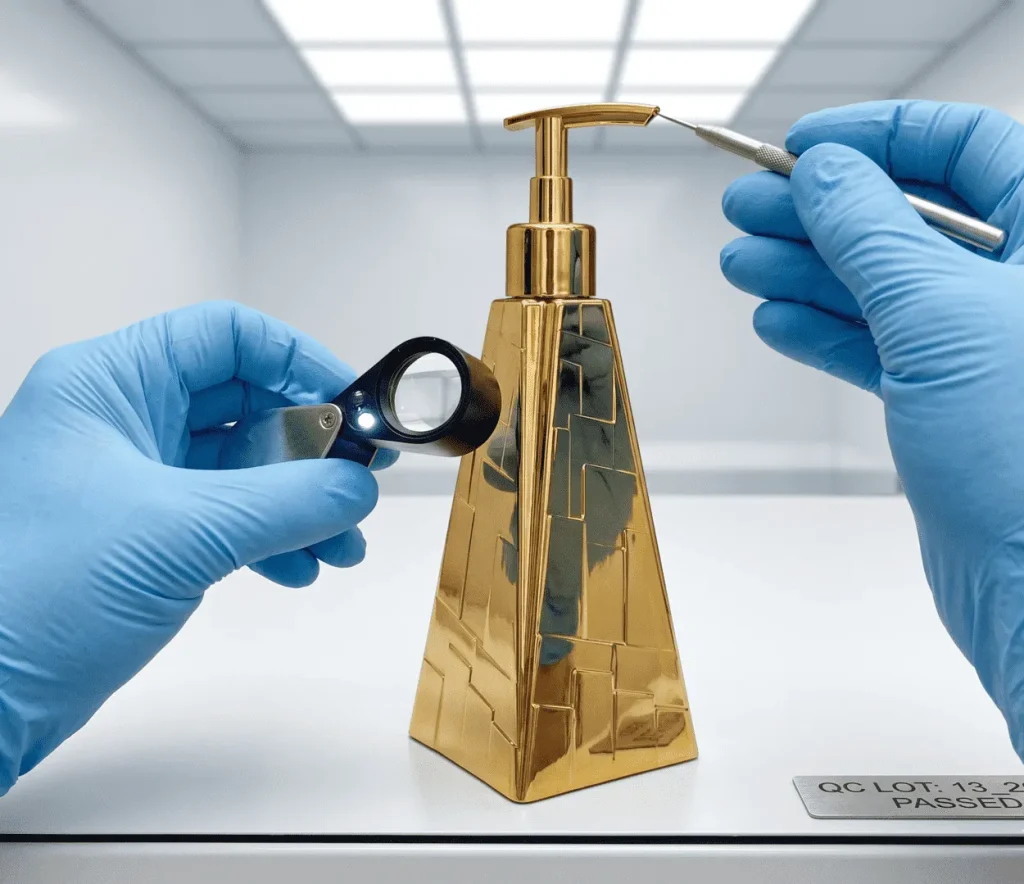
Quality Control in Soap Dispenser OEM Manufacturing
Quality control is one of the most critical stages of the manufacturing process.
A product that will enter the market under a brand’s name must meet the required standards.
Raw Material Inspection
Quality control begins when raw materials enter the facility.
Inspection items include:
- Polymer material quality
- Color consistency
- Mechanical strength
Pump Performance Testing
The pump is typically the soap dispenser component subject to the greatest wear.
Common tests include:
- Smooth operation
- Leak-free performance
- Durability under repeated use
Assembly Testing
At this stage, the following are checked:
- Sealing performance
- Connection strength
- Visual quality
Final Inspection
Before orders are dispatched, products are inspected for:
- Visual quality
- Performance
- Packaging
before approval.
What Should You Consider When Choosing a Soap Dispenser Manufacturer?
Selecting the right manufacturing partner is one of the most important factors in project success.
Industry Experience
A manufacturer with a long track record in the market will generally have more stable production and quality-control processes.
Production Capacity
Production capability should align with the brand’s growth plans.
Flexibility
The ability to execute customized orders is highly important.
Consistent quality
Products should maintain consistent quality across all production batches.
Post-Production Services
Support, spare-parts availability, and the ability to repeat orders are important advantages in a long-term partnership.
Advantages of Working with a Domestic Manufacturer
In recent years, many brands have shifted toward domestic manufacturing.
The main reasons include:
- Shorter supply lead times
- Easy access to the manufacturer
- Better quality control
- Lower import-related risks
- Ability to revise orders quickly
- Lower logistics costs
Sepidar Plastic’s Role in OEM Projects
With more than 30 years of experience manufacturing washroom accessories and various soap dispensers, Sepidar Plastic has the capacity to work with brands, distribution companies, construction projects, and businesses operating in the sanitary equipment sector.
High-volume manufacturing experience, consistent quality, flexibility in executing customized orders, and the ability to respond to different market requirements are among the capabilities that matter most in OEM projects.
To learn more about our manufacturing capabilities, visit About Sepidar Plastic.
Custom Soap Dispenser Manufacturing Process: Summary Table
| Stage | Objective |
|---|---|
| Project Requirement Assessment | Define product specifications |
| Model Selection | Select the soap dispenser type |
| Material Selection | Determine final quality and price |
| Design and Branding | Create a distinctive brand identity |
| Prototyping | Evaluate the product before production |
| Mass Production | Order Production |
| Quality Control | Ensure product standards |
| Packaging and Shipping | Prepare the product for market |
Frequently Asked Questions
1. What is custom soap dispenser manufacturing?
It is a process in which a manufacturer produces a product according to the customer’s specifications and under the customer’s own brand.
2. What is the difference between OEM and Private Label?
OEM generally allows greater product customization, while Private Label typically uses an existing product sold under the customer’s own brand.
3. What is the minimum order quantity for bulk soap dispenser orders?
It depends on the product type, mold, level of customization, and production requirements, so the minimum can vary from project to project.
4. Can a custom logo be added to the soap dispenser?
Yes. Many OEM projects can include logo printing and customized packaging.
5. What factors affect the final order price?
Raw material type, order volume, pump type, product design, packaging, and the level of customization are among the main factors that determine pricing.
Request Consultation and a Custom Manufacturing Quote
If you plan to develop a private brand in washroom accessories, assess production capacity, build quality, customization options and continuity of supply. For technical information, OEM terms, bulk orders and quotations, use our contact page or the OEM partnership request form.