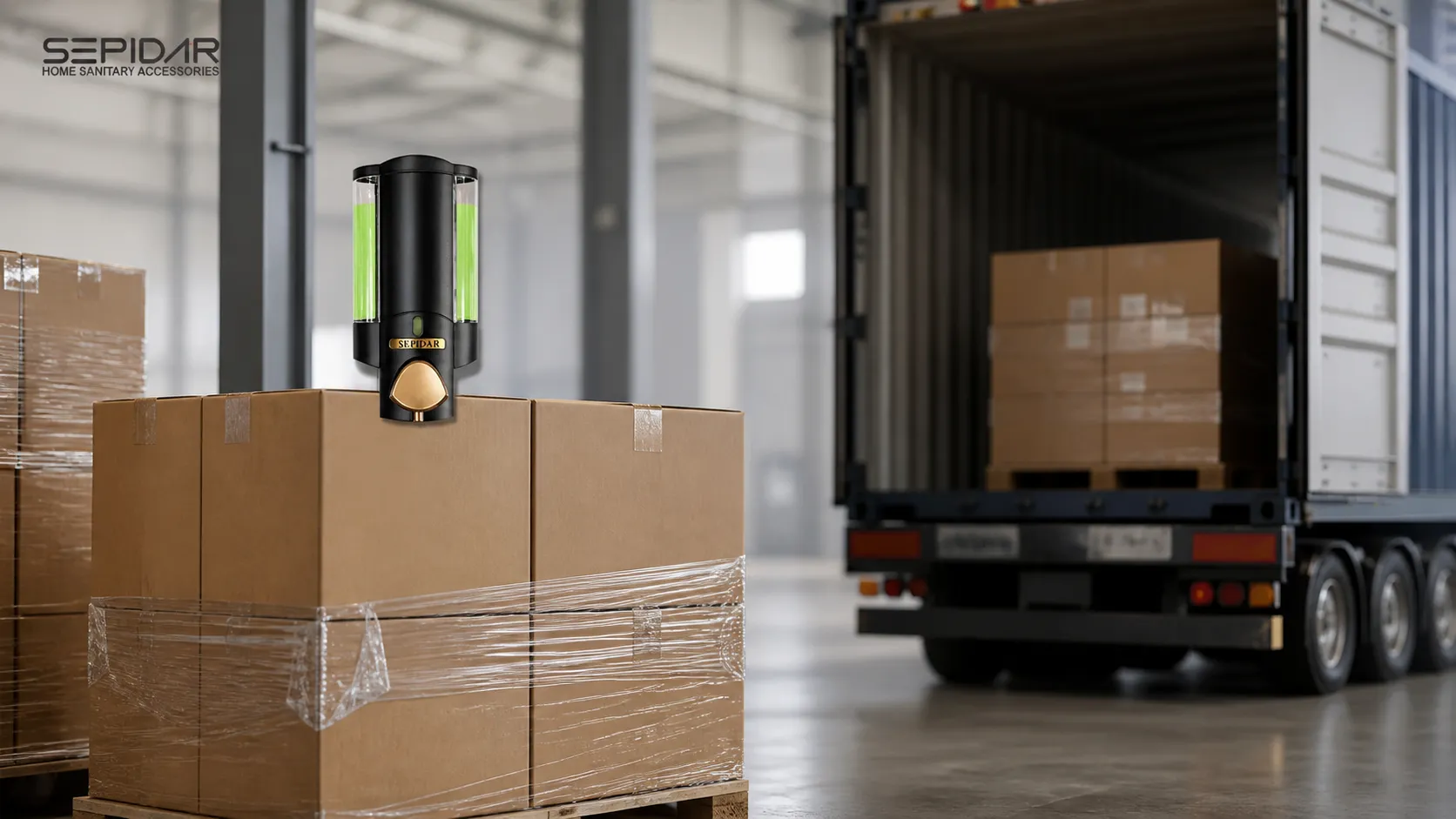
Exporting Iranian soap dispensers involves more than finding an overseas buyer. The product must suit the destination market, shipping method, packaging expectations and commercial documents. Even a well-designed model can cause problems in a lasting partnership if it is damaged in transit, labeled incorrectly or supplied with different components on a repeat order.
Understand the destination market first
Color preferences, mounting method, capacity and target price vary by market. Clarify whether the product is intended for retail, a hotel project, a commercial building or a private label, then select suitable samples.
Approve a reference sample and written specifications
To prevent disputes, record the approved sample’s color, components, pump, packaging and labels as the order reference. Photos alone are not enough to verify color or assembly details.
Test the product for its export journey
In addition to pump performance and leakage, account for vibration, carton stacking pressure, temperature changes and storage time. Test the packaging in conditions close to the planned shipment.
What should export packaging provide?
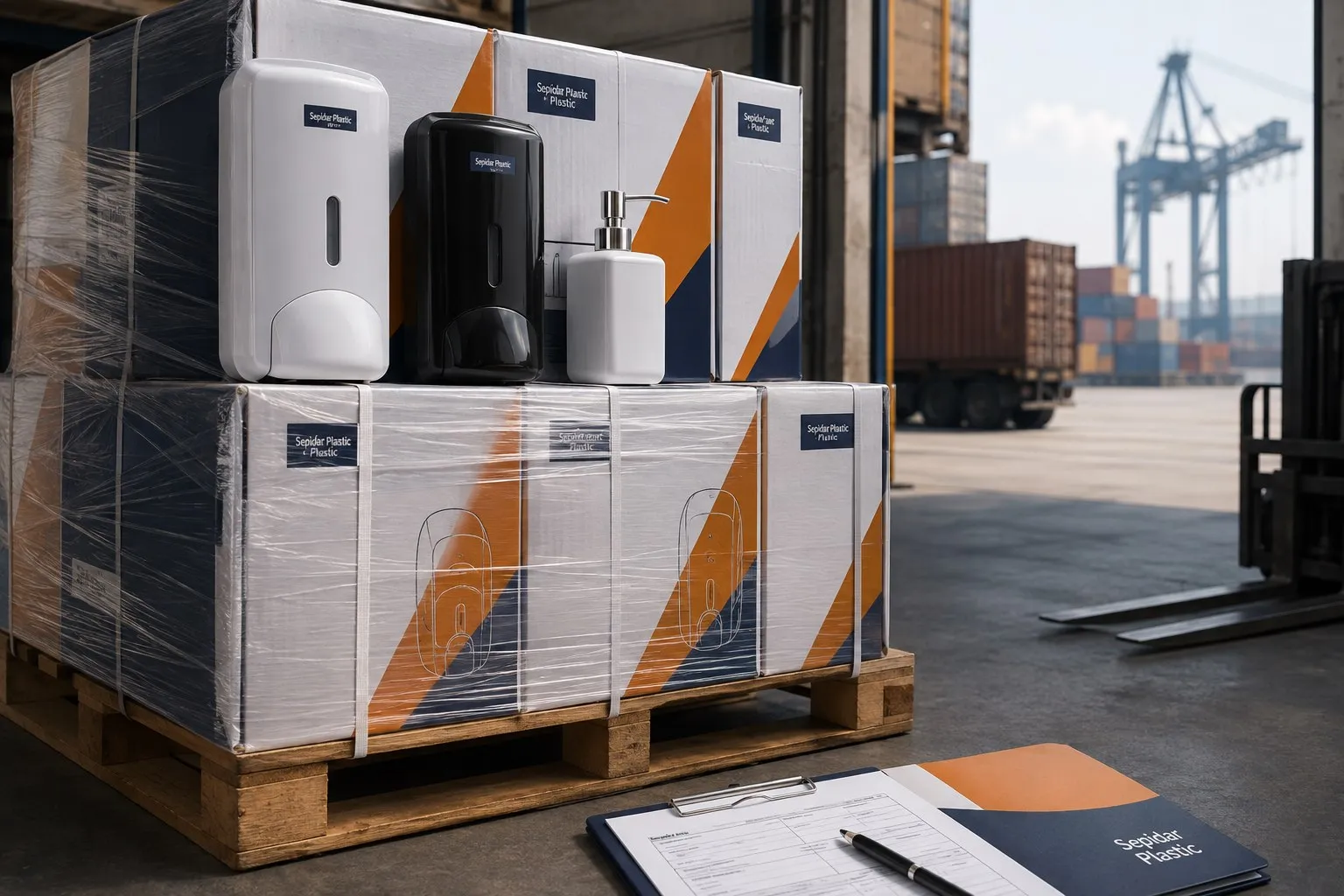
- Protection for the finish and projecting parts.
- A master carton suited to the weight and packing layout.
- Separation of models and colors for easier counting.
- Space for information required by the destination market.
- Stable pallet stacking with minimal unused space.
Packaging should suit road, sea or air freight. The importer or a qualified trade adviser should confirm destination-specific legal and labeling requirements.
Language and information on the package
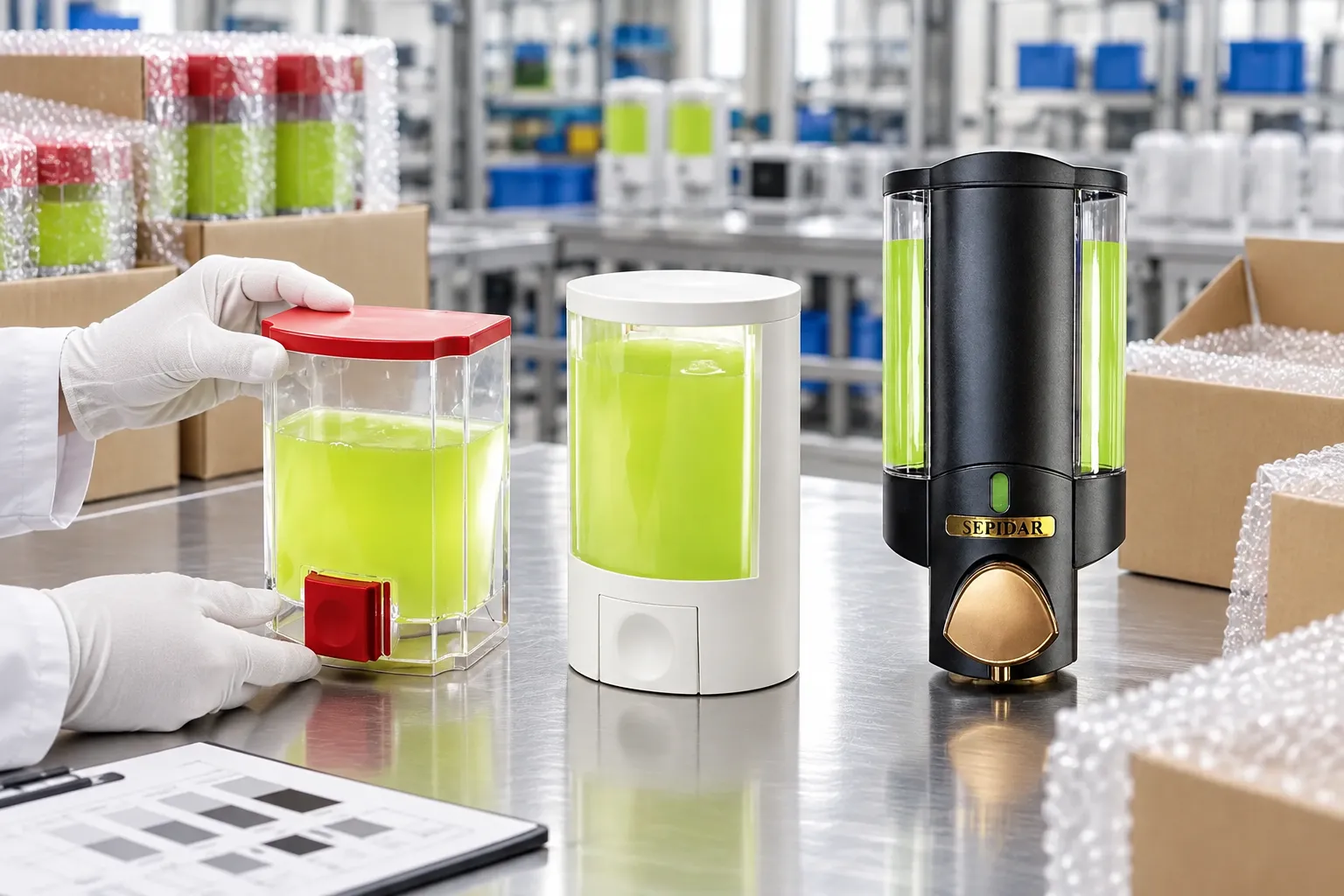
Product name, model, country of origin, quantity, instructions and required warnings should follow destination-market rules. Machine translation without professional review can create ambiguity. Have the buyer approve the final text before printing.
Spare parts and after-sales support
Overseas buyers often ask how replacement pumps and parts will be supplied. Including a reasonable quantity of service parts and a list of their product codes can make warranty handling easier.
Private-label manufacturing
For private-label work, agree on logo placement, colors, box design, print files and design ownership. Once approved, the pre-production sample becomes the quality reference. Learn about Sepidar’s OEM services.
Documents and responsibilities
Customs rules, standards and documents differ by country and can change over time. Exporters should verify them with official sources and a qualified customs broker. The manufacturer can provide product and packaging information, while commercial and legal responsibilities should be set out in the contract.
Export quotation checklist
- Destination country and sales channel.
- Model, color and quantity for each option.
- Private-label and custom-packaging needs.
- Label information and required language.
- Agreed delivery terms.
- Sampling and pre-shipment inspection plan.
Conclusion
Successful exports depend on a suitable product, an approved reference sample, protective packaging and clear agreements. Explore the Sepidar product range. Bulk buyers and export partners can share their requirements through the contact page.
Next steps for an export order
Compare suitable dispenser models, assess the manufacturer’s production capability and test a representative sample before confirming the order. These checks can reduce preventable issues during shipping and repeat supply.