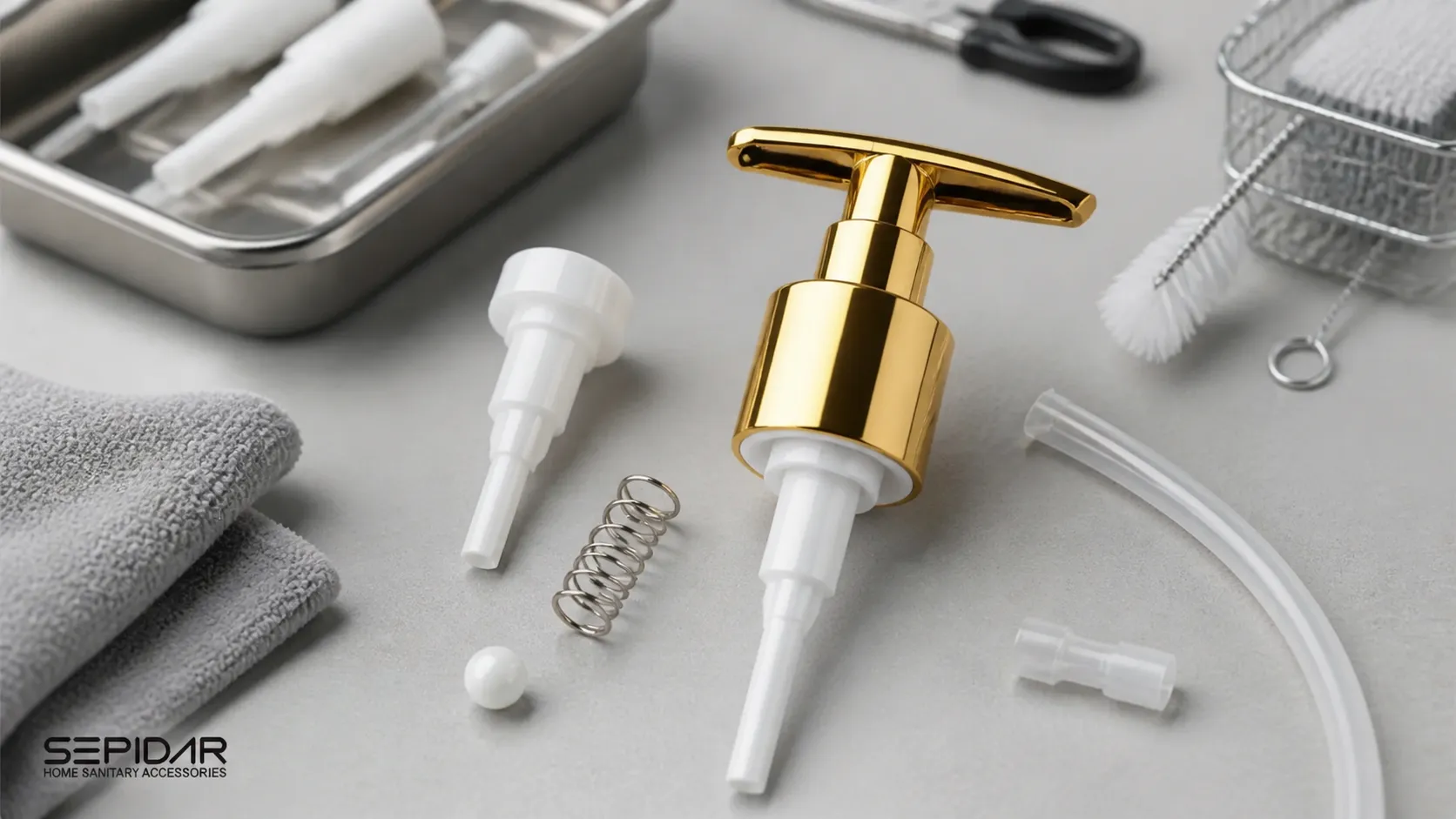
A soap dispenser pump that stops working does not always mean the pump has completely failed. In many cases, trapped air, a blocked nozzle, an unsuitable dip tube, or liquid that is too viscous can reduce or stop the flow. A step-by-step check helps identify the cause without damaging the components.
Start with safety and cleanliness
Before disassembly, move the product away from sensitive areas, wear suitable gloves, and consider the type of liquid inside. Do not mix cleaning products. If the product is under warranty or uses a sealed mechanism, avoid unauthorized disassembly.
Quick pump troubleshooting by symptom
Start with the symptom and read the relevant step in this guide. Without knowing the model, the exact cause of a fault cannot be confirmed.
- The pump moves but no liquid comes out: check the liquid level, dip-tube position and priming; see sections 1 and 2.
- Flow is low or irregular: check the outlet, liquid viscosity and tube connection; see sections 3–5.
- The pump head does not rise after pressing: review section 6 and the signs that a part may need replacement. Do not use unknown oils or solvents.
- Liquid drips from the nozzle or connection: identify the leak point. For sealing and model-selection guidance, see the drip-free soap dispenser guide; if the issue continues, contact technical support.
1. Check the liquid level and dip tube
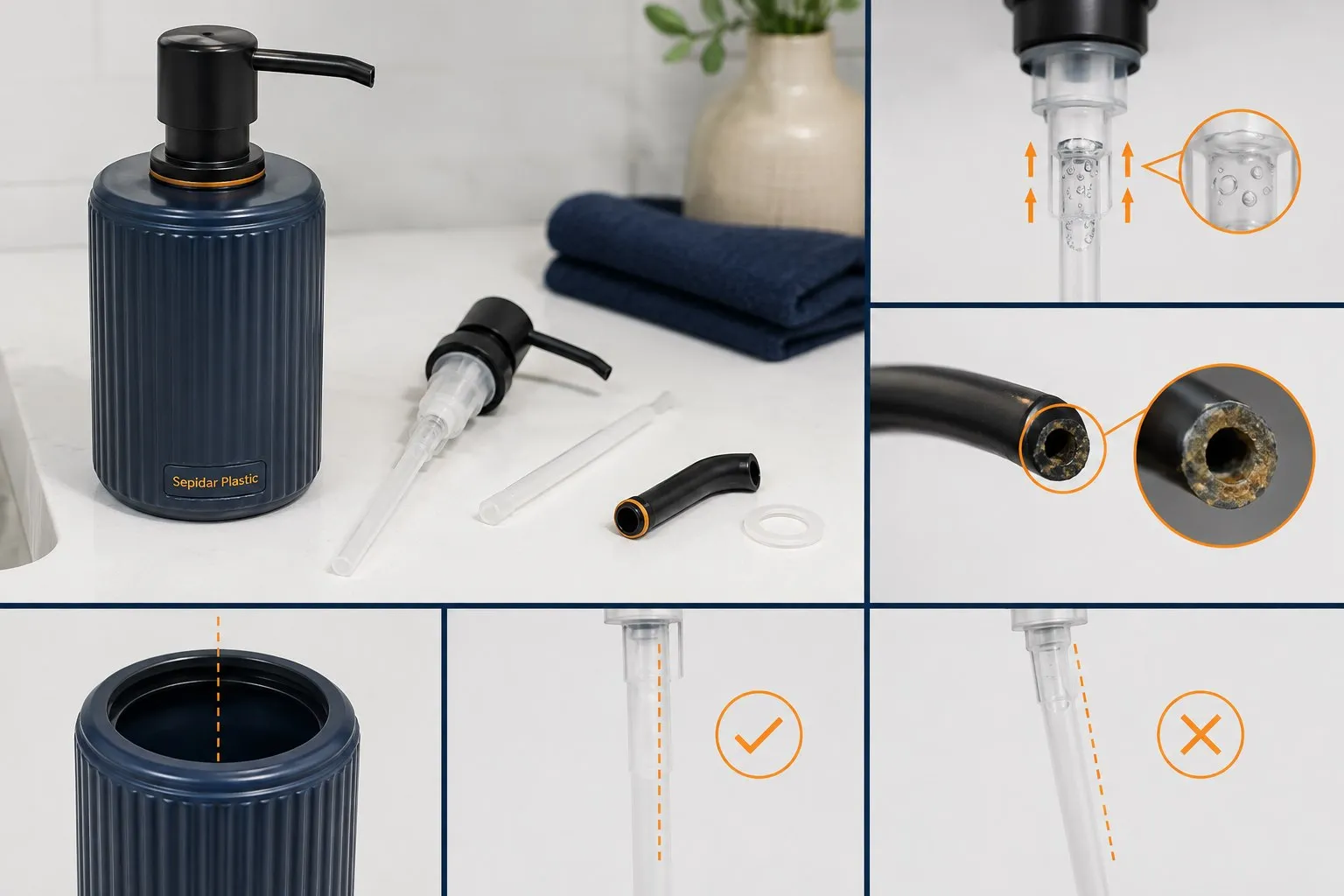
Make sure the end of the tube is submerged in the liquid and is not pressed against the bottom of the container. Cracks, kinks, or a disconnected tube can draw in air. The tube length should match the height of the container.
2. Prime the pump
After refilling or cleaning, the line may be full of air. Press the pump fully and slowly several times until liquid reaches the chamber. If there is no change after a reasonable number of strokes, continue to the next check.
3. Check for a blocked outlet
Dried product at the pump tip is a common cause of reduced flow. Remove residue using a compatible cleaning method and a soft tool. Sharp objects can damage the outlet or seals.
4. Check liquid viscosity
A standard pump may not be suitable for gels or highly viscous liquids. If the pump works with water or a thinner liquid but not with the intended product, viscosity compatibility should be checked. Pumps for viscous liquids are designed for different application requirements.
5. Check for air leaks at the connections
A loose tube connection, cap, or internal component can interrupt suction. Refit accessible parts correctly without applying excessive force. A crack in the tube or connector body may require replacement.
6. Check the spring or return mechanism
If the pump head does not rise after being pressed, the mechanism may be stuck or obstructed by dried residue. Do not use an unknown oil or solvent, as it may be incompatible with the liquid or pump components.
How to clean the pump properly
Empty the remaining liquid and flush the flow path with an approved solution according to the manufacturer’s instructions. Allow the components to dry fully, or prime the system again with a compatible liquid. For sensitive formulations, the formulator’s guidance should also be followed.
When should a part be replaced?
A cracked tube, damaged thread, permanently reduced output, corrosion on an unsuitable component, or a failed mechanism can make replacement the sensible option. For project installations, keeping spare parts available helps reduce downtime.
Prevention is better than repair
- Use a liquid that is compatible with the pump.
- Do not leave the reservoir dry for long periods.
- Include the outlet nozzle in the routine cleaning schedule.
- Avoid striking the pump head or pressing it at an angle.
- Store pumps clean and without sustained pressure on the mechanism.
Conclusion
Soap dispenser pump troubleshooting should begin with the simplest causes: the liquid, dip tube, trapped air, and blockages. If the problem continues, check pump compatibility and the condition of the components. For suitable pumps, spare parts, or further guidance, visit the Sepidar Plastic parts page or contact us.
Related guides for selection and maintenance
For viscous liquids, read the guide to choosing a pump for viscous liquids. Before placing a bulk order, review the soap dispenser quality-control tests, and compare product types in the complete guide to wall-mounted and countertop soap dispensers.
Related models and enquiries
Before ordering a replacement, confirm compatibility with your reservoir and the liquid being used with the sales team.